City of Takoma Park 2026 Election Candidate Questionnaire

Responses to the 2026 Takoma Park City Election Candidate Questionnaire

Below are the responses of seven of the candidates in the 2026 City of Takoma Park elections.*


  1. Name and Office For Which You are Running. (Campaign websites linked to names).

Tom Gagliardo, Mayor

Doug Glynn, City Council Ward 1

Jim Della-Giacoma, City Council Ward 2

Suzy Stimler, City Council Ward 2

Tom Wallack, City Council Ward 3

Kurt Gilbert, City Council Ward 4

Ambroise Agosse, City Council Ward 6


2. Do you think Takoma Park’s rent stabilization law needs to be changed, and if so, what changes do you support and why?

Gagliardo, Mayor:
I would not change the provision allowing rent increases up to the rate of inflation. The Incumbent hasn’t demonstrated a need to change that provision or to extend the five-year exemption in order to align City law with County law. I would add a provision to prohibit a rent increase of any size when there are significant code violations.

Glynn, Ward 1: No. The rent stabilization law seems to be working well. Initiatives to align Takoma Park with County laws would not benefit our residents as it could potentially double the permissible annual rent increase. Landlords have the opportunity to file a petition in certain cases to increase rents. I believe maintaining our current law does not stifle construction or development.

Della-Giacoma, Ward 2: The law does not need to be changed but its implementation can be improved with better education for renters about their rights. The city can continue to help residents to organize and better represent their interests to owners. Landlords need more education about their responsibilities and options under the existing law and help to fund building maintenance and rehabilitation to ensure that renters not only have access to stable and affordable housing but it is of good quality.

Stimler, Ward 2: I support the preservation of Takoma Parkโ€™s rent stabilization law. It has served us effectively since 1981, and the vibrant, racially and socio-economically diverse community we love and cherish is its result. Depending on the RSG study results, I would consider changing the exemptions for deed-restricted buildings, as many have units that are not deed-restricted or subject to rent stabilization, and to capital improvement pathways, to help landlords keep buildings safe and energy efficient.

Wallack, Ward 3: I feel that Takoma Park should continue to lead on rent stabilization, rather than simply defer to the County to set a uniform policy. Takoma Park is special, and in all my conversations with residents on this topic, people want to ensure Takoma Park remains affordable for current and future renters. My belief is that the best way to do that is to keep our rent stabilization law as it is.

Gilbert, Ward 4: Takoma Park’s Rent Stabilization Law has been a saving grace for our residents for many years. I like that we are exploring ways to improve the law. Aging of some of our buildings has created opportunities for low income housing developers to opt out of our law and use the county guidelines. This allows for higher increases in some of those occasions due to the type of lending. I am not certain that our laws can be changed to restrict that opt out, but would welcome that idea.

Agosse, Ward 6: I support maintaining rent stabilization. It provides important protection for renters and helps prevent displacement. I am open to improvements, but any changes must include strong safeguards and should not weaken protections for residents with limited or fixed incomes.


3. What is your vision for the scale and type of development in our City in order to best serve our community?

Gagliardo, Mayor: Building affordable housing is the priority. The availability of land on Hospital Hill is an opportunity for the entire community to work with Adventist Health Care and Washington Adventist University to foster development of affordable, missing middle and market rate housing compatible with surrounding neighborhoods.

Glynn, Ward 1: I believe Takoma Park needs development that is commensurate with the size of the city given that space is very limited. Hospital Hill is the most eminent space to be developed, which I support as long as we contemplate the needs of a variety of people with different economic possibilities. Also, we should carefully consider what impacts this may have on surrounding neighborhoods, as well as critically evaluating the negative repercussions of higher population density.

Della-Giacoma, Ward 2: We should support quality partners to increase housing choice. This includes MHP plans to rebuild Edinburgh House and those by the Grace Methodist Church for senior housing. In the medium term, the Washington Adventist University has an ambitious vision for a mixed use development with significant affordable housing. This large site has great potential and Takoma Park residents should see this as an opportunity to achieve a net gain in affordable housing of good quality.

Stimler, Ward 2:
I support development that creates employment for local residents, diversifies the local economy, and is environmentally sustainable. I support the use of local and state resources to expand deeply affordable housing, catalyze โ€œmissing middleโ€ opportunities, and ensure stable, affordable housing for seniors. I am committed to protecting our rent stabilization law. I believe that creating new residential choices must be supported by new retail businesses within walking and biking distance.

Wallack, Ward 3: I think people move to Takoma Park because it is Takoma Park – a unique, progressive, livable community. To me, this means lots of green space, (relatively) affordable housing options, and a feeling of community in our neighborhoods. We need to preserve our affordable housing stock and work to ensure a range of housing options that can accommodate current and future residents at various income levels and housing needs (i.e., seniors, families, multi-generational households).

Gilbert, Ward 4:
I would love to see more affordable housing and economic development in our city. So long as our infastructure can adequately support such development and does not adversely impact our environment.

Agosse, Ward 6: My vision is development that creates opportunities while respecting our neighborhoods. The City should better promote existing resources, support local businesses, attract responsible investment, and partner with employers to create jobs. I also support local job fairs connecting residents directly with employers.


4. Increasing property taxes to pay for bigger City budgets is making it harder for some homeowners and renters to remain in our community. What changes will you support to address this issue?

Gagliardo, Mayor:
Spending needs to be focused on community needs. Property tax relief needs to be income-related allowing neighbors on fixed incomes to stay in their homes. I would eliminate the requirement to live in a residence for a lengthy period. This would allow older residents to downsize and remain eligible for tax relief. The Council needs to instruct the City Manager to start identifying cost savings now.

Glynn, Ward 1:
A first step would be to request that the City manager identify cost-saving possibilities and prioritize these as new initiatives. The City needs a more realistic vision for capital projects so they do not run grossly overbudget. I support property tax relief for our neighbors on fixed incomes.

Della-Giacoma, Ward 2: I have heard concerns about taxes. The city cut the tax rate in the last budget, and county increases and rising state assessments were a major factor in rising tax bills this year. The FY2028 budget will be challenging to manage with new multi-year union agreements, high inflation, rising costs, and record diesel prices. I will aim to keep the property tax rate level or less. Last year, the city expanded tax relief for homeowners on fixed incomes.

Stimler, Ward 2: I support a cost-benefit analysis of current City services and programs, especially those we duplicate. For example, Takoma Park is the only municipality in Montgomery County with a full-service police department; policing is 31% of our FY27 budget. Rockville and Gaithersburg serve as models of keeping operations while transferring investigative services to the County. If we fail to find areas of cost savings, the result will be a maintenance of effort budget that continues to outpace inflation.

Wallack, Ward 3: I believe we have to minimize future property tax increases and mitigate the impacts of past increases on residents. This requires a few different things. First and most importantly, we need to be willing to make hard choices on the budget. Second, we need to look to diversify our revenues sources. Third, we need to ensure eligible residents are taking advantage of the expanded tax rebate program the Council approved earlier this year.

Gilbert, Ward 4: I do not support increasing property taxes in order to pay for bigger city budgets.

Agosse, Ward 6: Property taxes support essential services, but continued increases can burden homeowners and renters. I support slowing tax increases by carefully reviewing City spending, eliminating unnecessary expenses, improving efficiency, and diversifying revenue through grants, partnerships, economic development, and other sources.


5. What is your position on two-year versus four-year terms for City Councilmembers, including whether that decision should be voted on by residents or be approved by a simple majority vote of the Council?

Gagliardo, Mayor: I oppose four-year terms. Any change of this magnitude should only be done by referendum. I have proposed to the current Mayor and City Council and District 20 delegation to amend state law to make referendums achievable. Current law makes it practically impossible.

Glynn, Ward 1: I support maintaining two-year terms since this has been the system our city government has used for decades. Allowing for fresh, innovative ideas to come forward via new candidates is a crucial element in our democracy. Another vital part of our democracy is for members of the community to have a voice in these decisions, and their vote serves as their voice.

Della-Giacoma, Ward 2: I would like more information on two- vs. four-year terms. The real question is whether we have the right balance between accountability and effective governing in a small city. Our Charter already strikes that balance: Council can act by majority vote, but residents can petition any change to referendum. That built-in check means voters, not just Council, always have the final say.

Stimler, Ward 2: I am a strong advocate of keeping two year terms for City Council to maintain accountability and to give all of our 16 and 17 year olds the opportunity to cast their Youth Vote. In addition, I believe significant changes to the City Charter and to how we practice participatory democracy in Takoma Park should be brought to the people in an advisory referendum, as we did in 2017 when moving elections from odd to even years.

Wallack, Ward 3:
I strongly believe terms should stay at two years. As to the process question, the City Charter lays out two options for amendments, which this would be. Those options are via a vote by the Council (with a required notice and input period) or resident petition (and then either Council adoption or a voter referendum). I am open to learning more from residents about why the amendment process should be changed for terms of office or any other particular measure.

Gilbert, Ward 4: I do not take strong exception to either method. Our ward representatives should be listening to their residents and making decisions based on what they feel is a general consensus, coupled with their individual beliefs. We could also add the question to a vote in the forthcoming election.

Agosse, Ward 6:
I support keeping two-year terms and believe residents should have a direct voice in any change. Two-year terms provide frequent opportunities for voters to evaluate their representatives and help keep elected officials accountable and connected to the community. Leadership requires continuous engagement with residents.


6. How would you promote the meaningful participation of a wide range of residents in Council decision-making? And, what is your position on the public being allowed to clap and hold signs at City Council meetings?

Gagliardo, Mayor: I encourage and embrace public input. Important issues should be explained in the City Newsletter and website, so people can think about proposed changes and decide what they want to say. I would hold interactive public hearings, akin to hearings in the Maryland General Assembly and Congress. Hearings would be held at times convenient to the public, not late on the agenda of Council meetings. And I believe the public should be able to clap and hold signs.

Glynn, Ward 1: Ways to promote meaningful participation include allowing residents more than three minutes, and to two-way discussions. I feel that if members of the public would like to clap in support of other speakers, this is perfectly acceptable and a normal part of public interactions, as is holding up signs during meetings, so long as they do not interfere with other individualโ€™s ability to see.

Della-Giacoma, Ward 2:
I would engage residents via email lists, neighborhood meetings, social media, walk-and-talks, and use city committees to convene topical presentations, such as the Emergency Preparedness Committee’s webinar on Sligo Creek flooding. The Council has adopted Robertโ€™s Rules of Order as the recognized authority on meeting procedure, which says in Section 61:8 that โ€œall persons present at a meeting have an obligation to obey the legitimate orders of the president officer (i.e. the mayor).โ€

Stimler, Ward 2: The Council needs to make opportunities for resident engagement easy and convenient. This includes holding Council meetings in locations outside the Community Center and providing multi-language materials and translation services. I celebrate public participation in City Council meetings and have no problem with clapping or signs provided that clapping does not impede residentsโ€™ 3 minutes to speak and signs are small enough that they do not encroach on othersโ€™ physical space or sight lines.

Wallack, Ward 3:
We are a small town with many smart and passionate people. I think there could be greater community engagement in the discussion of issues before the Council and the Council should explore ways to facilitate this. I think people should be able to clap in support of comments and hold signs at Council meetings.

Gilbert, Ward 4: I encourage residents to come to meetings and speak on whatever topic concerns them. I feel that the 3 minute time frame is adequate and 5 minutes can be requested. I think that should be the only time for us to express our personal views during council meetings. There are certainly other city platforms of which to be heard. Clapping, booing and holding signs are unnecesary distractions.

Agosse, Ward 6:
I support clapping and signs at Council meetings as it makes the meeting active. I also support multilingual outreach, neighborhood meetings, and accessible online and in-person participation so immigrants, seniors, renters, and residents with limited incomes have meaningful voices in City decisions.


7. Does the City do enough to protect the nearly one-third of Takoma Park residents who are immigrants and, if not, what further steps should the City take to do so?

Gagliardo, Mayor: No. Where are the visible signs of resistance to ICE’s cruelty? Rather than fear the cost of speaking out, we need to realize the cost of remaining silent. I will work closely with Montgomery Count IRC, Community Safety Network, We Are Casa and Blair Unida.

Glynn, Ward 1: My wife is an immigrant from Mexico who was granted citizenship just over a year ago, so this is a topic I take very seriously. I believe the City has every intention to protect our immigrant residents, however, the City could also make its resistance to ICE more visible. This may be achieved by published statements on the Cityโ€™s website, articles in the Newsletter and by fostering peaceful protests within City limits that speak out against aggressions towards immigrants.

Della-Giacoma, Ward 2: We donโ€™t, and we should not, allow our police to cooperate with federal immigration enforcement. We do this as a long-standing principle as a welcoming city, but also for very practical reasons, as this would undermine the very trust with people in our communities that our police need to help keep us all safe. The city is doing more than many realize to use our taxes for grants for community organizations supporting immigrants and the most vulnerable, and this should continue.

Stimler, Ward 2: FY27โ€™s $93,500 in Community Quality of Life grants to local groups supporting immigrant residents impacted by federal immigration enforcement is a step in the right direction, but it is not enough. The City must codify that ICE cannot use City property for civil immigration enforcement, cover immigration enforcement in the newsletter and online, offer know-your-rights and bystander training, and hold standby guardianship, second key, and passport clinics, waiving City passport fees for minors.

Wallack, Ward 3: We have to do more. The lives of our fellow residents are in danger. We should continue to work closely with the community groups on the frontlines of protecting immigrant communities to figure out what the city can do to help.

Agosse, Ward 6:
The City can do more to engage and support immigrant residents. I support stronger multilingual outreach and better access to information about jobs, housing, education, City services, and business opportunities. Partnerships with employers and community organizations can also expand job training and employment opportunities.


8. Do you think the Cityโ€™s commitment to racial equity is effective (please elaborate)?

Gagliardo, Mayor: Much of what the City considers a commitment to racial equity is performative. The refusal of the current Mayor to conduct or support a racial equity study before the Council voted on the Minor Master Plan Amendment was a betrayal of a commitment to racial equity.

Glynn, Ward 1: Although the City has taken some positive steps forward by committing to โ€œdecision-making through a racial equity lensโ€ and officially joining GARE, it is unclear as to how effective these initiatives have been. We need more concrete data and real-world examples of its effectiveness to claim it has been implemented successfully. Without these, it remains only symbolic and superficial.

Della-Giacoma, Ward 2: To know whether it is effective or not, we would need to evaluate each aspect of city equity efforts, such as each Racial Equity Impact Statement from council agendas. One case I know where it was effective was the decision to support the Habitat for Humanity house on Garland Ave. This allowed an immigrant family living in a rented apartment on Maple Ave to move into a โ€œmissing middleโ€ renovated duplex on our street, without the children moving schools or going far from grandparents and friends.

Stimler, Ward 2:
The goal of the racial equity framework is to ensure that there is no racial disparity in policies, programs, or services provided by the City. Currently, the City Council focuses on whether existing policies, programs, or services discriminate. The focus needs to shift towards an examination of how policies and programs are devised and how services are provided. The City Council must ensure that programs and services are actually used by everyone, without de facto discrimination.

Wallack, Ward 3:
I need to learn more about exactly what all the city is doing to fulfill our commitment to racial equity. I support the goals of the Racial Equity Initiative and believe the Council and City should continue to work diligently to meet them.

Gilbert, Ward 4: We can make some improvements in this regard. Changes to the Tenant Opportunity to Purchase Law (TOPL) could help with affordable housing loss and make for more housing opportunities for people of color and immigrants in the future.

Agosse, Ward 6: The City has taken steps toward racial equity, but there is more work to do. We should regularly measure whether our policies and programs are producing meaningful results, identify remaining disparities, listen to affected communities, and ensure all residents have fair access to services, opportunities, and City decision-making.


9. What should the City do to advance meaningful climate change adaptation and resilience, and address biodiversity loss?

Gagliardo, Mayor: The effort to electrify vehicles is praiseworthy, but more is needed. We must assess the possibility of returning storm water management to the County, which has more resources and a more robust response to climate change. Preserving what remains of our tree canopy is essential. I fully support resident environmental groups, Friends of Sligo Creek, Stormwater Solutions, Climate Action Coffee. Their achievements, perspective and proposals need to be incorporated into City programs.

Glynn, Ward 1: First, we must support active resident groups that are doing very important work. Next, place more emphasis on electrifying the fleet of City vehicles to reduce our carbon footprint. Investigate and reevaluate what services, such as storm water management, the County can more effectively provide than Takoma Park given certain robust systems already in place.

Della-Giacoma, Ward 2: Climate risks include flooding, stormwater management, extreme heat, storms, and drought. The cityโ€™s Sustainability and Climate Action plan aims to improve climate resilience. The Sustainability Manager works with the Sustainable Maryland Committee (Green Team), composed of knowledgeable residents. This partnership should be supported. Better infrastructure and planting trees can help with some risks, and improve biodiversity, while preparedness and assistance to residents are needed for others.

Stimler, Ward 2: The City has clear programs and metrics for reducing greenhouse gases emissions and preserving our tree canopy. We need to do more to address heat and biodiversity, developing programs to address urban heat island effects, such as promoting green and cool roofs, and programs to maintain and increase biodiversity, using the City Biodiversity Index (CBI) to evaluate and monitor our progress.

Wallack, Ward 3:
The city should be a central node in coordinating efforts to address the impacts of climate change. This includes conveying information to residents and businesses on what they can do, enhancing resilience through stormwater management, and protecting biodiversity, among other efforts.

Gilbert, Ward 4: Keeping climate change and biodiversity in mind when addressing development and holding develpers accountable in that regard is important. I have seen our staff and residents do just that during conversations about current and forthcoming development projects.

Agosse, Ward 6: I support continuing the Cityโ€™s environmental work while strengthening climate resilience, particularly stormwater management and flood prevention. We should improve drainage, protect streams and natural areas, maintain our tree canopy, support biodiversity, and prepare neighborhoods for increasingly severe weather.


10. How could the City improve transparency and accountability in the wake of the sexual harassment lawsuit against the City?

Gagliardo, Mayor: Important events and policies needs to be published in the City Newsletter and website. Many records need to be made publicly available without a formal request. I have long called for release of the sexual harassment audit. As with any lawsuit, the public needs to know the truth of what happened and who is responsible. Closed meetings should be the exception. Contrast the Mayor’s response in that case with the County Executive’s response to recent wrongdoing by the County Police Chief.

Glynn, Ward 1: The City should be more responsive to questions that have been asked about the incident. This would also entail releasing the audit. Citizens have a right to know what the Mayor knew and when, why the suit was settled for $1 million and the reason(s) behind not immediately dismissing the offending party from City employment. Publishing this information in the City Newsletter would help regain the trust of citizens and bolster transparency.

Della-Giacoma, Ward 2: Balancing confidentiality against transparency on administrative, legal, and personnel matters is challenging as state law states that for local governments in Maryland, specific matters can be heard in closed session as needed. Using this right judiciously and sparingly is the challenge of all councils. Improving residents’ knowledge of their rights under the Maryland Public Information Act and how to use it could be a practical step to boost transparency and accountability.

Stimler, Ward 2: Transparency starts with the City following all requirements under the Maryland Open Meetings Act not just to the letter of the law, but in the spirit of the law. Meetings should be closed and reports withheld only when absolutely necessary, and any information that can be released should be, even if it must be redacted. Accountability starts with having a clear set of expectations and following through when they are not met. Decisions should be principled, not just “legally justifiable.”

Wallack, Ward 3:
I believe we as residents still deserve more information about this whole situation and greater accountability is still needed. As a member of the Council, I will push for more answers and more information to be shared.

Gilbert, Ward 4:
The city council released a pretty elaborate explanation on the findings of that event after the independent audit of the investigation.

Agosse, Ward 6:
The City should strengthen workplace accountability through regular staff and management training, clear reporting procedures, fair and independent review of complaints, and periodic evaluation of personnel policies. While respecting privacy and due process, the City should communicate clearly about corrective actions and prevention efforts.


*Both Mayoral candidates submitted responses by the original deadline. Candidate Cara Honzak, who had not seen the invitation in time, asked for an extension, and in the interest of fairness, that extension was also offered to the three other candidates (Shana Fulcher, Kurt Gilbert, Amy Wesolek) who had not submitted questionnaire responses. However, Mayoral candidate Talisha Searcy then withdrew her responses, citing the unfairness of the extension.
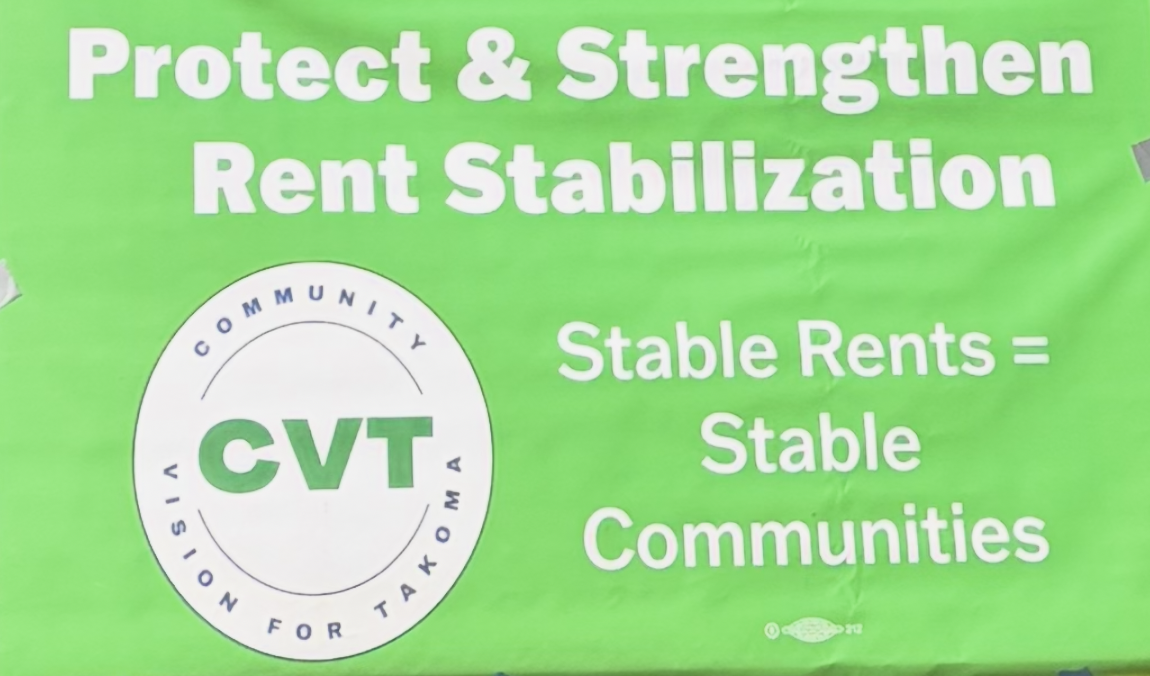


Sign the Petition to Protect Our Rent Stabilization

What’s at stake…

Our city’s historic rent stabilization law, which helps keep rents affordable, is now being reviewed by City Council. Unfortunately, the review process opens the door to weakening the law for renters.

Please sign our PETITION to urge the Council to continue to prioritize tenant rights, and continue to limit allowable annual rent increases to no more than the rate of inflation.

  • Nearly half of Takoma Park households are renters. About half of these benefit from rent stabilization. (The other half live in units that are exempt from the law.)
  • Our law caps annual increases for rent-stabilized units at the rate of inflation (Consumer Price Index) – 2.4% this year. The Countyโ€™s cap for the year is more than double at 5.7%.
  • Forty-seven percent of our renters are either โ€œhousing cost burdenedโ€, spending over 30% of their income on housing, or โ€œseverely burdenedโ€, spending 50% or more on housing.
  • Our law keeps rents affordable for many residents with low incomes. That creates stability and sustains the diversity and wellbeing of our whole community.
  • The Councilโ€™s review and possible revision of our law could either increase or reduce tenant rights and the availability of affordable rental housing for those with few options.
  • Weakening our rent stabilization law would be especially cruel while anti-immigrant violence and economic forcesย threaten Takoma Park renters, who are mainly people of color.

PLEASE SIGN THE PETITION HERE.

Haga clic aquรญ para leer en espaรฑol.

แˆ›แˆ˜แˆแŠจแ‰ปแ‹แŠ• แˆˆแˆ›แŠ•แ‰ แ‰ฅ แŠฅแ‹šแˆ… แŒ แ‰… แ‹ซแ‹ตแˆญแŒ‰

Rent Stabilization: Why We Care (Community Vision for Takoma)


A Rent Stabilization Policy Review: Why should we care?

(Public Comment Delivered to City Council on Nov 5 2025)

  • Do tenants know that Takoma Parkโ€™s ordinance limits rent increases for half the Cityโ€™s renters to the rate of inflation (2.4% this year)?
  • Do they know that allowable rent increases in most of the rest of Montgomery County this year is 5.7% and no caps in Rockville and Gaithersburg?
  • Do home-owners know that half our neighbors are renters and that they and many of their children wouldnโ€™t be in our neighborhoods and schools if not for our progressive Rent Stabilization ordinance?
  • Isnโ€™t this law what makes us the progressive and an inclusive community that we claim to be?

The City plans to pay a consultant at least $85,000 to help Council and Staff begin reviewing this important ordinance. Unfortunately, the timing is problematic and potentially dangerous for the participation by our immigrant population. 83% of renter households are non-white. The Federal governmentโ€™s proposed cutbacks to affordable housing make the timing even worse. Community Vision for Takoma (CVT) recommends delay, but we will continue to monitor the study whenever it proceeds. We care about and are proud of our Cityโ€™s leadership on progressive Rent Stabilization. Due in large part to this law our community is socio-economically and racially diverse. All of us are stakeholders in this review.

Consistent with the Cityโ€™s 2019-30 Housing and Economic Development Strategic Plan, CVT supports a rent stabilization review that focuses on protecting the most vulnerable from displacement. CVT will consult and advocate with tenants to protect them from displacement as a result of possible rent increases or other proposed changes. We will also support changes that help small landlords address any unnecessary administrative burden to receiving Fair Return. We will also support ways to enhance both the quality and number of low to moderate income housing. Building on the RFPโ€™s scope, I include with this testimony specific review recommendations for consideration by the consultant, Council and Staff. We care.

Frankly, we are concerned that some City leaders may ascribe to a one-dimensional development agenda at the expense of robust tenant protections. The suggestion that Rent Stabilization is preventing development in Takoma Park has not been backed up by actual evidence. It also ignores other factors, including the fact that the City is โ€œalready densely developedโ€, (per a City authorized assessment)1, and has the highest property tax rate in the County. To adequately analyze any barriers to additional multi-family housing, a much broader and deeper study would be required of relevant policies, economic trends and landuse research and involving a wider set of stakeholders.

It is clear nationally that moneyed interests have successfully lobbied to reduce the role of government in truly affordable housing. We are asking our City to buck this trend, protect our social contract and maintain the Cityโ€™s robust and progressive role in preserving our economic, racial and social diversity.

As noted, I have included separately a list of study recommendations. It includes:
1) Clarify that the Cityโ€™s 2019-2030 Housing and Economic Development Strategic Plan and its three main objectives (Preserving, Producing, and Protecting) will provide the foundational definitions for the three โ€œpillarsโ€ of our housing policy.
2) Review contextual changes in the overall policy landscape and their bearing on the program at least since 2010.
3) Research and report back on the following data sets: a) Racial equity impacts of policies tracked over time, b) Rent-stabilized units converted to ownership by tenants, c) Quality and safety of units in rent-stabilized buildings, and
4) Plan secure meetings with tenants on the premises of stabilized housing buildings.

As Takoma Park residents and advocates for good government, CVT welcomes the opportunity ahead to share input and discuss this important review with the Council, Staff and consultant. Thank you for your openness to broad community engagement. In that spirit, we urge the Council to define and clarify
“effectiveness,” the stated goal in the proposed ordinance. Lastly, I trust that the Council and staff will consider and forward our recommendations to the consultant selected. Thank you.


Randy Gibson, on behalf of Community Vision for Takoma

  1. City of Takoma Park Housing and Economic Data Analysis, The Cloudburst Group, Oct., 2017. One of the โ€œKey Findingsโ€, p. 13: โ€œBecause Takoma Park is largely built out, there is little new residential construction.โ€

Protect Takoma Park Neighborhoods: Keep Rent Stabilization Strong

The Issue: The City of Takoma Park, at the Mayor and Councilโ€™s request, is reviewing ourย historic rent stabilization law. Unfortunately, the review process seems skewed towards weakening the law to appear more attractive to developers. Thatโ€™s not housing justice!


The Law: Almost half of all households in our City rent their homes. Nearly half of all rental units are rent-stabilized, with annual rent increases now limited to the rate of inflation: 2.4% in 2025 compared to 5.7% in the County. Property owners can apply for โ€œfair returnโ€ increases, above that level, and several exemptions exist, including for government-subsidized buildings and single-family houses.

Its Impact:ย Local data indicates our law has helped preserve our economic and racial diversity and provided stable housing. Many low-income families, including many immigrants, have been able to afford their homes for decades, planting roots and raising their children in a community with strong schools and good local services.ย We all benefit from the resulting community-wide sense of security and well-being.

What to Do? โ€“ย  Community Vision for Takoma (CVT) invites you to work with us in the months ahead to urge the Council to make sure any changes in the law:

  • Strengthen tenant protections.
  • Preserve affordable housing, especially for residents with low incomes.
  • Help landlords better maintain and repair buildings.
  • Prevent higher rents or teardowns that would displace current residents.
  • Honor our community values: Diversity, inclusivity, protecting the most vulnerable.

If youโ€™d like to receive CVT Alerts or join our working group on housing, email: tjcommunityvision@gmail.com.

Without Full Council Debate,ย City Issues RFP for Major Policy Review of Rent Stabilization Law

On July 8, the City of Takoma Park issued a Request for Proposals (RFP) for a consultant to conduct a policy review of our vital Rent Stabilization Law.  

Before this staff-written RFP was released, Community Vision for Takoma sent the Council and staff a critique with recommendations [see a copy below] on an earlier draft staff wrote, proposing what the goals and scope of the review should be. The final version of the RFP was issued without a full Council deliberation or vote on those critical points, despite support from at least two Council members for such a public decision-making process.

This issue affects us all, whether renters, landlords, homeowners, or businesses. Please read the RFP, and CVT’s suggestions, and consider for yourself the importance of the issues that CVT raises. Have they been adequately addressed? 

We invite you to work with us in the coming months focusing on such critical issues as: 1) protecting current residents and small landlords from displacement, 2) preserving Takoma Park’s rare stock of affordable housing, and 3) the urgency of reviewing all past and proposed policies with a racial-equity lens.


Comments and Suggestions on Rent Stabilization RFP

Community Vision for Takoma

July 1, 2025


As presented at the June 11th Council meeting, the goals for the RFP do not accurately reflect the Cityโ€™s current Housing and Economic Development Strategic Plan, approved in 2019.

The Planโ€™s three main objectives were clearly articulated as:

  • PRESERVE existing businesses and affordable housing in Takoma Park, including in revitalizing areas.
  • PRODUCE more housing and opportunities for businesses to start and grow across the income spectrum and in neighborhoods across the City to meet the diverse housing and economic needs.
  • PROTECT renters, homeowners and local businesses from discrimination and displacement, and protect our environment from destruction.

The Strategic Planโ€™s only mention of a review of rent stabilization is to serve the first objective โ€“ to preserve existing affordable housing โ€“ not to question its impact on the pace of development in the City. The Plan also, under each of those three main objectives, includes this specific strategy: โ€œConsider all advocacy and action through a race equity lens.โ€ Given that 83% of householders who rent in our City are households of color, the third goal โ€“ protection from displacement โ€“ as well as the first goal, which is closely related (preserving existing affordable housing) should be at the core of any evaluation of both existing policy and potential changes to ensure that racial equity concerns are prioritized.


In contrast, the draft RFP calls for a consultant to recommend revisions to our rent stabilization law based on analyzing the impacts of the existing law and any proposed changes on housing โ€œaffordability, quality, and choice.โ€ By themselves, those three words are not clearly aligned with the three officially designated goals of the Cityโ€™s Strategic Plan, and are nowhere actually defined. None of the three terms specifically addresses protection from displacement or preserving the Cityโ€™s unusual stock of deeply affordable housing. Nor do those words, or anything else in the RFP, indicate to the potential consultants that their entire project should evaluate existing policy and make recommendations โ€œthrough a race equity lens.โ€

In fact, the Councilโ€™s June 11th Agenda Item suggested that the study should focus on โ€œbalancing tenant protection, incentivizing high-quality housing, addressing affordability, and creating housing choiceโ€ โ€“ as if those goals may be in conflict with each other, or that each is as important as the other. That does not seem to take Takoma Parkโ€™s community values into account. Is increasing โ€œchoiceโ€ in housing โ€“ which apparently means developing new housing for current or future residents who can afford more expensive options — really as much of a priority as protecting tenants, especially the Cityโ€™s many very low and extremely low-income residents?

Choice and more options for whom are key questions for Council to clarify, especially given limited developable land, tight City budgets and uncertain economic trends. Robust data is needed to prioritize and target housing efforts to serve the most vulnerable residents.

In light of the above, we advise the following changes to the draft document. These are needed to realign the entire RFP with Takoma Parkโ€™s unique identity, based on a set of core, shared values that do not yet shine through the RFP document:

  1. Clearly emphasize throughout the document that the promotion of racial equity and socio-economic and racial diversity are core community-wide values and are to be top priorities in reviewing the law and proposing revisions. It is important that there be a thorough review of the impact on equity and diversity of our rentstabilization policies over time. Any proposed change should also be carefully evaluated as to its potential for positive and/or negative impacts on improving measures of equity and diversity.

The City has not yet developed its own process for conducting a racial-equity analysis, to use in such an evaluation. However, the RFP could direct the consultant to commit to conducting its review through a racial equity lens, with an option to either adapt the OLO RESJ Project Methodology Tool, used by the Montgomery County Councilโ€™s Office of Legislative Oversight, or, if approved by staff after consultation with the Council, an alternative expert tool proposed by the consultant.

2. Revise the language of the RFP to specify that Protection from Displacement is to be a major focus of the review and a major goal of any recommendations for changes in the law or other City policies. That would include protecting tenants potentially priced out of affordable housing options or who could lose their homes if their buildings are torn down to make room for new construction, as well as protecting local businesses, especially small landlords in the City who are struggling financially to maintain older buildings.

The consultant should attempt to identify revisions that would increase such protection, as well as examining how potential changes might increase the threat of displacement. The study should include a close look at measures of housing stability through the years and how any potential changes could affect the likelihood of tenants being able to stay in their homes. Evaluating impacts on stability should include a fine-grained look at historic trends in tenant tenure, eviction rates, and how the law has impacted those, as well as analysis of how proposed changes might affect that important marker of community well-being.

Preserving the Cityโ€™s unique stock of deeply affordable housing should also be clearly addressed as key to protecting current residents from displacement. This would require a building-by-building inventory of code violations and needed repairs or upgrades. In that context, the RFP should call for the consultant to review not only this law but other City policies, to evaluate what changes would be helpful to encourage and support landlords whose older buildings are most urgently in need of repairs and renovation, including energy-efficiency upgrades.

It’s also essential for the consultant to clearly evaluate both historical and potential impacts on the supply of rental units affordable at particular income levels — not just to make general statements about “affordability,” without defining that term. For example, City staff report that, as of 2022, 93% of our rent-stabilized units are affordable for very low income households (with incomes of no more than 50% of area median income(AMI)), and about 14% are affordable for extremely low income households (no more than 30% AMI). The analysis must focus on this degree of detail, to capture what proposed changes might mean for our most affordable housing.

3. Strengthen Community-Wide Engagement requirements, to ensure the
results are authentic and really provide robust, meaningful opportunities for the consultant, City Staff, and the Council to interact deeply and effectively with the full range of stakeholders.

Strong representation of tenants is urgent, as are the voices of landlords, especially small landlords who are also residents. But representatives of the broader resident community โ€“ including homeowners โ€“ is also appropriate, given the impact that progress toward racial equity and socio-economic and racial diversity has on the stability and well-being of our entire community. Consider directing the consultant to work throughout its project with a Council-appointed taskforce that represents the full range of stakeholders.


Q&A: Rent Stabilization in Takoma Park

Q&A on Rent Stabilization in Takoma Park by Community Vision for Takoma (CVT)

(A working document, comments welcome).

Do you care about housing justice in Takoma Park? Then consider following the City Councilโ€™s new review of what may be the single most impactful law our small city has ever passed: Our Rent Stabilization ordinance. To help residents prepare to take part in this process, the 15 Questions & Answers below offer an overview of the current law โ€“ and whatโ€™s at stake in its review and potential revision.

Question 1: What is Takoma Parkโ€™s Rent Stabilization Law all about?

Answer: Takoma Parkโ€™s ordinance is apparently the oldest continuously in-effect law in the State of Maryland that stabilizes rent. The first version of our law was passed in 1980.1 (More than 200 other local governments as well as two states โ€“ Oregon and California โ€“ and the District of Columbia2 now have such a law as well.) Our law requires most landlords who rent out multifamily buildings or individual condominium units to limit their annual rent increases to the percentage increase in the Consumer Price Index from the year before. (For 2025, the maximum increase allowed is 2.4%.)

However, there are several landlord exemptions available even for those types of housing โ€“ including for units that are federally subsidized. Also, for entire buildings, if they operate under a contract with a government agency that requires at least half the units to be affordable for residents with low or moderate incomes. Owners of newly constructed multi-family rental facilities can also apply for a five year exemption. And the law does not apply to single-family rental housing or accessory dwelling units. In fact, just 1,636 of the 3,217 rental units in the City โ€“ about half — were rent-stabilized, as of 2023.3

For more details, you can read the law here.

Q2: How has Rent Stabilization impacted our community?

A: Rent stabilization has contributed significantly to the stability and resilience of our Takoma Park community. It has succeeded in preserving an unusually dense supply of affordable housing in high-priced Montgomery County. (Median rent was $1,318 in Takoma Park, compared to $1,957 in the County, as of 2022.)4

By preserving such reliable affordable housing, the law has played a major role in preserving our economic and racial diversity.5 (Thatโ€™s not surprising, given the evidence that rent stabilization is a powerful tool for racial justice.) It has enabled Takoma Park to provide housing access to residents from near and far who can plant new roots and raise their children in a community with strong schools and good local services.

And there is evidence that rental communities in our City really are more stable: As of 2022, the median number of years Takoma Park renters have lived in their home is 7 years, compared to just 4 years in the County, which is just starting its own rent stabilization program.6 Rent stabilization has not only directly benefited many Takoma Park residents who rent, of whom a high proportion are residents of color. It has also promoted a broad sense of stability and community-wide security that contributes to the health of our whole city.7


Q3: Overall, what percentage of Takoma Park household are renters?

A: Takoma Park is a densely populated municipality of about 2.1 square miles with an ethnically and economically diverse population of about 17,500 people. About 48% of all households rent their homes. By comparison, about 35% of all households in Montgomery County rent their homes.8


Q4: What about the buildings that are fully exempted from our Rent Stabilization Law because the owners have signed a government contract to limit the rent for at least half of their units? How high are the rents for units that are not included in that protected proportion that must be affordable? And whatโ€™s the total number of units in each of those buildings that are not protected at all from hefty rent increases, either by our law or by those government contracts?

A: We urge the Council to ask staff to provide the data to fully answer this question โ€“ and to evaluate how total rents and the pattern of annual increases in rents in those uncovered units compare to buildings that are under our law. Note, though, that most renters in the City are either covered by the law or live in units subsidized or rent-regulated in some way by a government agency.


Q5: But is rent stabilization fair to landlords, who are trying to make a living, or does it force them to basically subsidize their own rentals?

A: The law specifically recognizes the value of allowing landlords to get a fair return on their investments. They are able to petition for special increases, beyond the yearโ€™s approved percentage increase. They can do so if they find themselves in any particular year in circumstances that require a higher rent to pay the costs of maintaining the safe, quality housing that residents deserve, while making a fair return for their own businesses. More details about such โ€œFair Returnโ€ rent increases are here. (Staff have stated that landlords have made limited use of Fair Return applications. A review to verify if that reflects satisfaction with increases allowed or some issue with the process โ€“ such as ease in navigating it or being informed about it โ€“ could be part of the rent-stabilization review.)


Q6: CVT alerted residents earlier this year about political pressures for a new Maryland State law to prohibit any local government from including something called โ€œVacancy Controlโ€ in its rent-stabilization law. Whatโ€™s that all about, and how would it affect Takoma Park?

A: A major goal of rent stabilization is to protect stability and affordability for current and future tenants. After a tenant moves out can the landlord raise the amount of rent to market rate, or is the current rent for the year offered to new tenants? Keeping the rent level for the next tenant after the prior tenant vacates an apartment unit is called โ€œvacancy control.โ€ Allowing the rent to float up to market rates between tenants โ€“ often to levels which prospective new tenants can no longer afford โ€“ is called โ€œvacancy decontrol.โ€

Affordable housing advocates stress the importance of vacancy control because it helps protect tenants from displacement and prevents a loss of reasonably priced rental housing. They fear that vacancy decontrol creates an incentive for landlords to displace long-term tenants and to select tenants who are more mobile and have higher incomes. The laws for both Takoma Park and the County include vacancy control. The effort to ban such provisions failed this year (2025) in the Maryland legislature, so our policies are still in effect. Locally, high-level support for vacancy control among both City and County elected officials was reaffirmed in March 2025. 9


Q7: Has rent stabilization stifled development of new multifamily rental buildings in the City?

A: Opponents of the Cityโ€™s rent stabilization law often make this claim. However, they havenโ€™t been able to offer persuasive evidence that a lack of new development is caused by rent stabilization. Thereโ€™s good reason to doubt that assertion. A 2017 report to the City Council from a housing consultant, for example, concluded otherwise. One of its โ€œkey findingsโ€: There has been little new development in Takoma Park for years because the City โ€“ which is just over 2 square miles in size โ€“ was already densely developed.10

More recently, a major new opportunity for considerable new housing has opened up at Hospital Hill, the site of the former Washington Adventist Hospital. And another site, owned by a church on New Hampshire Avenue, is already being planned for development, which will include 78 new affordable units for seniors.

Moreover, the results of a number of studies across the nation show that, in general, rent stabilization does not appear to stifle new housing development. For example, a 2021 national review of research on rent stabilization, in a report from the University of Minnesota, concluded: โ€œLittle empirical evidence shows that rent control policies negatively impact new construction. [highlighting in original] Construction rates are highly dependent on localized economic cycles and credit markets. Additionally, most jurisdictions with rent stabilization specifically exclude new construction from controls, either in perpetuity or for a set period of time.โ€11

In fact, Michael Bodaken, Adjunct Professor at the University of Marylandโ€™s School of Public Policy and former head of the National Housing Trust, testified to the Montgomery County Council in 2023 on just this point: โ€œThe evidence shows that overall market conditions, interest rates, costs of materials, and zoning have much more influence over new housing supply than rent regulations,โ€ he wrote. โ€œThis is particularly the case in prosperous locations like Montgomery County.โ€

And nearly three dozen economists in 2023 published a letter making a strong case for expanding rent regulations โ€“ pointing to โ€œsubstantial empirical evidence that rent regulation policies do not limit new construction, nor the overall supply of housing.โ€


Q8: Does rent stabilization make it hard for landlords to afford proper maintenance and so lead to the deterioration of the Cityโ€™s rental housing stock?

A: We arenโ€™t aware of any local study on this question, which we agree is an important one to evaluate. One goal of such an evaluation should be how to use and preserve our law while making sure the overall impact of local City and County regulations, code enforcement, and financial incentives support landlordsโ€™ efforts to keep their properties in good condition.

It is notable that the same 2021 national review of rent stabilization found: โ€œThere is little evidence that rent regulations cause a reduction in housing quality. Some evidence shows that major capital improvements keep pace with need but that more aesthetic upkeep may suffer. Most programs allow for the pass-through of capital improvement costs.โ€


Q9: In Takoma Park, given the age of many of our rent-stabilized buildings, wouldnโ€™t it help if City policies strongly encouraged landlords to maintain the quality of our affordable housing stock so we donโ€™t lose it?

A: Yes. In fact, a 2018 study12 funded by a national group representing multifamily apartment landlords concluded that even under actual rent control (vs. our more flexible form of rent stabilization): โ€œThere is no clear association documented in the empirical research between rent control and building quality, particularly if other ordinances, requirements, or incentives are present to have landlords maintain buildings.”

So, any City review of our Ordinance should carefully evaluate whether we and the County have the right mix of such requirements. For example, this could include a review of how thorough and timely inspections and enforcement of housing codes are, as well as evaluating incentives, such as sharing costs of improvements or extending tax breaks related to repairs when appropriate.

Also, the review should pay special attention to an emerging maintenance challenge: New County energy standards. The County Council recently passed mandatory new Building Energy Performance Standards. These may require a review of cost-sharing options to help the owners of multi-family rental buildings that are rent stabilized comply. Each building in the County that is 25,000 sq. ft. in size or more has its own โ€œsite energy use intensityโ€ (site EUI) standard that it must reach by a certain deadline. (A list that includes all the multi-family buildings in our City that must meet such standards and their deadlines is available here.) Site EUI is a measure of the energy use per gross square foot of building area each year. Each buildingโ€™s final performance standard is based on what the building is used for.

Q10: Does rent stabilization tend to promote a decline in the total amount of rental housing units? Does it create an incentive for owners to either convert their properties to condominiums or tear them down and totally rebuild, or to sell to other developers who will do so?

A: This question, to our knowledge, has not been carefully evaluated locally. We urge the City Housing staff to compile and share data on condo conversions of rent-stabilized units in Takoma Park. The 2021 nationwide review did find that research shows, in general, that rent regulation โ€œis related to an overall reduction in units.โ€ However, other research demonstrates thatโ€™s not always the case, and that carefully written laws can avoid loopholes that encourage condo conversions.13 Depending on what a local analysis would show, if necessary, the City could follow other citiesโ€™ lead and add focused regulations to encourage landlords to stay in the rental housing market and continue providing affordable housing.

And consider this: When affordable rental units are converted to affordable condominiums or affordable cooperatives โ€“ which has happened in Takoma Park with the aid of the City and County โ€“ the change can provide affordable options for home ownership to residents with modest incomes who otherwise would not be able to afford buying a home. Given the importance of home ownership to building generational wealth, the equity impact of such conversions is also of value.

Q11: Why is the City Council reviewing our Rent Stabilization Ordinance now?

A: One reason: During the review of the Minor Master Plan Amendment (MMPA), a re-zoning plan, the City was pressured by the County Planning Board and the County Council to review the Cityโ€™s rent stabilization law.

Separately, the Mayor and some Councilmembers seem supportive of a major review as well. The new City Council has included a review of the Cityโ€™s ordinance as part of its official โ€œCouncil Prioritiesโ€ over this Councilโ€™s two-year term (which runs through October 2026). To date, it seems fair to say that the Mayor, some Councilmembers, and staff have expressed more interest in identifying revisions that might increase developersโ€™ incentives to build more housing units โ€“ whether affordable or not โ€“ than on changes that could strengthen tenant protections or overall housing resilience.

Q12: What role do our Rent Stabilization Law and other tenant protections play in meeting the Cityโ€™s major housing goals and challenges?

A12: This is a good question, deserving a full evaluation in any major review of the law. But we can make some preliminary observations. The Council, in its 2019 Housing and Economic Development Strategic Plan, prioritized three main housing objectives: Preserve, Produce, and Protect. The objective to protect was defined as: “Protect renters, homeowners, and local businesses from discrimination and displacement; and protect our environment from destruction.โ€

Notice the inclusion of language about protecting residents from displacement. City staff later reframed those objectives in 2024 as โ€œstability, choice, and quality,โ€ in a way that arguably de-emphasizes protecting residents from displacement.

     Stability was defined by staff as โ€œthe ability of residents to remain in their community.โ€ Stability for residents renting in multi-family buildings is significantly advanced by the Cityโ€™s Rent Stabilization policies. And stability among residents โ€“ whether they rent or own โ€“ is arguably threatened by high property taxes and rents.

     Choice was defined as residentsโ€™ ability โ€œto choose and find housing that fits their life situations.โ€ Choice is limited among certain housing types, notably duplexes, triplexes and townhomes and, for homebuyers, within certain price brackets, especially low to moderately priced single-family homes. A factor that impacts all housing choices is the limited availability of developable land. We note again this key finding of the 2017 City-funded study: โ€œBecause Takoma Park is mostly built out, there is little new residential construction.โ€

     Quality was defined as โ€œsafe, healthy and contains all amenities for comfort.โ€ While various enforcement mechanisms attempt to address quality, how well the Cityโ€™s many aging multi-family rental buildings are being maintained is a particular concern. A full analysis, including building-by-building evaluations of the need for repairs, would be a good first step to begin prioritizing this major issue. 

Clearly, rent stabilization and other tenant protections play a key role in achieving the Cityโ€™s overall housing goals โ€“ serving current residents but also new residents.  Any policy that might lead to displacement is directly at odds with the Cityโ€™s goals.

Q13: What other City policies significantly impact our housing?

A: Takoma Parkโ€™s suite of housing policies and programs work across the Stability-Choice-Quality framework, some clearly prioritizing housing justice in terms of promoting safe, affordable, well-maintained, stable shelter.

These programs include, for example, grant assistance with down payments for first-time home buyers who are income eligible and the Tenant Opportunity to Purchase Law, which since 1986 has given tenants a right of first refusal when a landlord decides to sell. Together, these policies have supported numerous residents, on their own or organizing with other tenants, to transition from renting to home ownership without moving. This can help residents of more modest means, who are disproportionately families of color, begin to build the kind of generational wealth and stability that has historically been disproportionately available to white families. (A success story that, on paper, is a โ€œlossโ€ of rental housing units, but is also a gain for the individuals involved and, at least in some ways, for our community.)

Another set of City policies offer other protection for renters, including Rental Assistance and Tenant Protection from Displacement programs.

There are also significant new City and County policies, whose impacts on housing itโ€™s too soon to evaluate fully. The Cityโ€™s new Housing Property Tax Credits passed in late 2024. But they will not be available until the Council has approved regulations to implement them. (As of mid-May, 2025, staff have not yet presented such regulations.) The credit for new, multifamily rental buildings would provide 10 years of full exemption from City property taxes, and five more years of partial exemption. Other, less generous tax credits would apply to  the rehabilitation of multi-family rental buildings (Council has instructed staff to flesh this idea out), and affordable housing preservation.

The Minor-Master Plan Amendment, approved in 2024 by the County Council, significantly changed zoning in the 132 acres along Maple Avenue and Flower Avenue, from Philadelphia Avenue to the west, and the Washington Adventist campus, to the east.14 The changes expand the allowable heights, floor-area-ratio (FAR) and commercial-development potential in the plan area, which includes the site of the former Adventist Hospital.

Both the new tax credit for newly constructed rental buildings and the MMPA zoning changes likely increase development potential โ€“ but also the potential for some resident displacement. 

Q14: How does the Cityโ€™s Rent Stabilization Law compare with Montgomery Countyโ€™s?

A: Broadly speaking, Takoma Parkโ€™s ordinance offers much stronger renter protections compared with the Countyโ€™s new law. Three significant differences are:

โ€ข The exemption period from rent stabilization regulations for brand new multifamily rental buildings is 5 years in Takoma Park, vs. 23 years under the Countyโ€™s law.

โ€ข After a buildingโ€™s โ€œsubstantialโ€ renovation, the County allows a new, 23-year period of exemption from its law. The City has no similar provision.  (Renovations that cost at least 40% of the buildingโ€™s assessed value are considered substantial, under the County law.)

โ€ข Our law caps annual increases for rent-stabilized units at the rate of inflation (Consumer Price Index) for the year before. For this year (which began in July 2026), the City limits rent increases for covered units toย 3%. The Countyโ€™s cap for this year isย 5.2%.

You can compare the two sets of regulations to see all the differences here. (Link here)

Q15: What can residents do to learn more and/or advocate for the Cityโ€™s Rent Stabilization and Housing policies?

A: Residents can learn more about individual policies from the Housing pages on the City Website and from our document โ€œSelected Rent Stabilization and Housing Policy Documentsโ€.  You can  also attend a City Council Meeting โ€“ which are most Wednesday nights at the City Community Center โ€“ when housing issues are on the agenda. You can make a 3-minute public comment in person or over Zoom at the meetings. Please also share your questions and concerns with your City Councilmember, the Mayor and the entire City Council.  Lastly, talk with your friends and neighbors to help them stay informed and engaged too.

And a special invitation: If you would like to actively work on these issues with CVTโ€™s Housing Working Group, send an email to:  Community Vision for Takoma at tjcommunityvision@gmail.com. Feel free to also email us, at the same address, any further questions, comments, or information you have about these issues.


  1. In the early 1970s, there were both federal price controls and a statewide rent-control law in effect. After those limits were lifted and rents began rising dramatically, Montgomery County declared a public emergency and passed first a rent freeze and then a rent-control law. That law was in effect from 1973 to 1977, followed by a transitional period during which another law temporarily gave the County the authority to disapprove rent increases of more than 10% if landlords could not provide โ€œadequate justification.โ€ That authority expired in 1981.ย  Takoma Park voted in their rent stabilization in 1980. Prince Georgeโ€™s and Howard Counties and Rockville also had rent-control programs from 1973 to 1976.ย  Read about this history here (pp. 6-10, 63-64, as numbered in the pdf). More recently, Montgomery and Prince Georgeโ€™s Counties adopted new rent-stabilization laws that took effect in 2024. The City of Mount Ranierโ€™s new law took effect In 2023. In addition, many jurisdictions in Maryland limited rent increases early on during the COVID-19 pandemic but later lifted those limits.
    โ†ฉ๏ธŽ
  2. Minneapolis Rent Stabilization Study, published by the Center for Regional and Urban Affairs at the University of Minnesota, 2021, p. 1, 4. โ†ฉ๏ธŽ
  3. Housing Annual Report, City of Takoma Park Housing and Community Development Department, Oct. 18, 2023. โ†ฉ๏ธŽ
  4. Housing in Takoma Park, City of Takoma Park Housing and Community Development Department, July 1, 2024. โ†ฉ๏ธŽ
  5. No racial group in Takoma Park is in the majority. Source: U.S. Census Bureau Quick Facts for the City. โ†ฉ๏ธŽ
  6. Housing in Takoma Park, City of Takoma Park Housing and Community Development Department, July 1, 2024.p. 14. โ†ฉ๏ธŽ
  7. Minnesota Rent Stabilization Study, p. 22, in terms of the national evidence that housing stability โ€“ which our rent stabilization supports โ€“ yield strong social benefits:ย  โ€œ. . .ย  housing research overwhelmingly stresses the importance of housing stability for economic well-being and physical, emotional, and mental health (Harkness and Newman, 2005; Smith et al., 2003; Welch and Lewis, 1998; Guzman et al., 2005; Bartlett, 1997). Housing stability has been associated with greater educational achievement among children (Scanlon and Devine, 2001; Kerbow, 1996; Brennan, 2011; Newman and Holupka, 2014).
    Also, for evidence of the relationship between housing instability and significant negative physical and mental health outcomes for both adults and children, see the summary and references in โ€œRent Regulations and the Montgomery County Rental Housing Market,โ€ from the County Councilโ€™s Office of Legislative Oversight, OLO Report 2023-5, p. 14. โ†ฉ๏ธŽ
  8. The population density of Takoma Park is about 8,382 people per square mile. That compares, for example to about 5,276 per square mile in Bethesda, 4,961 per square mile in Rockville, and 6,741 per square mile in Gaithersburg. (Source:ย  U.S. Census Reporter.) Sources for proportion of households who rent their homes in Takoma Park and Montgomery County: U.S. Census Bureau Quick Facts for the County and the City. Source for number of residents (individuals) who live in rented homes Is: โ€œFacts and Figures: Summary of Census Information Through 2022,โ€ City of Takoma Park Website. โ†ฉ๏ธŽ
  9. โ€œGood Cause/Vacancy Control Local Legislators Sign-On Letter (updated 3/14/25).โ€ County Councilmember Kristin Mink played a leading role in organizing this effort. In addition to Mayor Searcy, Takoma Park Councilmembers Jessica Landman, Cindy Dyballa, Roger Schlegel, and Cara Honzak signed the letter. County Executive Marc Elrich, Mink, and five other County Councilmembers signed it as well. โ†ฉ๏ธŽ
  10. City of Takoma Park Housing and Economic Data Analysis, The Cloudburst Group, Oct., 2017. One of the โ€œKey Findingsโ€, p.ย  13: โ€œBecause Takoma Park is largely built out, there is little new residential construction.โ€ โ†ฉ๏ธŽ
  11. Minneapolis Rent Stabilization Study, published by the Center for Regional and Urban Affairs at the University of Minnesota, 2021, p. A1. โ†ฉ๏ธŽ
  12. Lisa Sturtevant, Ph.D., โ€œThe Impacts of Rent Control: A Research Review and Synthesis,โ€ published by the National Multifamily Housing Council Research Foundation, May, 2018. โ†ฉ๏ธŽ
  13. Mark Paul (an economist himself), โ€œEconomists Hate Rent Control. Hereโ€™s Why Theyโ€™re Wrong,โ€ The American Prospect, May 16, 2023. โ†ฉ๏ธŽ
  14. For extensive commentary on, and the history of, the Takoma Park Minor Master Plan Amendment (MMPA), click on the link to โ€œAffordable Housing,โ€ on CVTโ€™s website. โ†ฉ๏ธŽ

On the City’s Proposed Housing Tax Credits

The City Council is on the verge of approving a package of housing tax credits.ย  Community Vision for Takoma welcomes new housing in our city that does not displace vulnerable residents and that is developed in ways that protect the environment, as the Councilโ€™s 2019 housing strategic plan wisely requires. We welcome new neighbors. We also strongly support incentives to preserve affordable housing and to renovate our deeply affordable–but aging–rental housing stock.

However, weโ€™re deeply concerned about the proposal to provide large, long-term tax subsidies for developers of market-rate multifamily rental housing. Given the major changes in Takoma Parkโ€™s real estate market due to both the enactment of the Minor Master Plan Amendment, which upzoned the center of the city to promote development, and the availability of a major, attractive site for development at the former Adventist hospital, we are not persuaded that tax subsidies are necessary to stimulate market-rate housing.

The City can ill afford to give away future tax revenues to for-profit developers.  We face a serious structural deficit in our City budget that may require painful choices about cutting City services or raising our already-high taxes.  CVT believes that it would be fiscally irresponsible to provide tax credits for market-rate rental housing that seems likely to be built anyway, given how popular Takoma Park has become as a housing destination. Trying to compete for developersโ€™ attention by being among the first jurisdictions to offer a big tax break for market-rate housing is not a policy experiment worth putting the Cityโ€™s shaky finances at further risk.

For these reasons, CVT opposes adoption of the market-rate housing tax credit.  We do strongly support tax credits to preserve affordable housing, which is so valuable to our community, and to rehabilitate the Cityโ€™s aging apartment buildings to ensure quality housing for residents. We urge the City Council to strengthen those two proposals.

New City Council Endorsements from Union and Environmental Leaders

Two new sign-on statements for City Council endorsements were released this week:

1. From City residents in the union movement:

Having devoted our careers to the union movement and having acquainted ourselves with the candidates we are happy to endorse Jessica Landman in Ward 1 and Roger Schlegel in Ward 3 for Takoma Park City Council. 

We know Jessica and Roger share our view that strong, effective unions are needed to improve the lives of all working people.  We believe they are the best candidates to represent these interests on our city’s Council.

Karen Ackerman, former AFL-CIO political director

Sally Davies, former President AFSCME University of Maryland College Park

Dennis Desmond, former Business Manager, LIUNA Local 11

Fred Feinstein, former NLRB General Counsel

Tom Gagliardo, civil rights, labor and employment attorney

Beth Grupp, union consultant

Paul Huebner, rank & file activist in Laborers Local # 74 & Fin. Secretary-Treasurer in Carpenters Local #1110.

Jennifer Martin, former President, Montgomery County Education Association

Bob Muehlenkamp, former Teamster Organizing Director

Steve Rosenthal, former political director of the AFL-CIO

Saul Schniderman- Former President AFSCME Library of Congress Guild

Miriam Szapiro, former chief NLRB Regional Advice Branch and union-side labor lawyer 

Joe Uehlein, former Secretary-Treasurer of Industrial Union Department, AFL-CIO and labor musician.


2. From City residents who are environmental and climate activists:

We, the undersigned, endorse the following candidates for Takoma Park City Council in 2024 because of their deep longstanding knowledge of, and commitment to,  climate and environmental issues.

Bob DreherEnvironmental lawyer and conservationist; worked for EPA, DOJ, FWS, Earthjustice, Defenders of Wildlife and Potomac Riverkeeper Network
Brenda PlattEnvironmental program director, national nonprofit organization, 30+ years
Byrne H. KellyLandscape Architect/Environmental Planner, Takoma Stormwater Solutions, DC Solar Coalition (plankholder) Installed Solar on the White House circa.1978
Catherine TunisEnvironmental Policy Analyst, retired; former Takoma Park Committee on the Environment
Charlotte SchoenmannArchitect, lighting activist
Colleen CordesFormer Psychology & Environment Fellow at Friends of the Earth, former TP Tree Commission chair
David HunterInternational environmental and human rights professor and advocate
David ReedEnvironmental economist, author of 7 books on international environment and security
De HermanJewish Earth Alliance, Takoma Park Drawdown, Climate Action Coffee
Diana YountsTPEM Environmental Working Group
Diane CurranEnvironmental and nuclear safety attorney
Diane MacEachernFormer Director of Communications, Sierra Club; Founder & Publisher, Big Green Purse. Resident of Takoma Park since 1984.
Dr. David BlocksteinCo-Director, Worldwide Climate and Justice Education Week
Dr. Robin BroadResearch Professor of Environment & Development, American University
Esther SiegelSustainable farmer, community activist
Ferd HoefnerSenior policy director, National Sustainable Agriculture Coalition
Gillian CaldwellFormer CEO Global Witness and former Campaign Director 1Sky (now 350.org)
Gina GaspinFounding member of TPSS Food Coop
Jimmy DaukasSenior manager at national farmland protection non-profit organization
John CavanaghInstitute for Policy Studies, the outfit co-founded by Jamie Raskinโ€™s dad Marc
Joseph KlocknerLEED AP BD+C, Klockner & Company โ€“ Sustainable Builders since 1982
Karen ElrichCo-founder TPSS food co-op, member Climate Action Coffee
Karen LangeJournalist on wildlife, sustainability and the environment
Kirsten StadeConservation Biologist, sustainability + environmental overshoot author
Kopal JhaTPSS co-op board, native ecosystem rejuvenation
Linda Pentz GunterJournalist, founder of TP-based anti-nuclear/environmental advocacy group, Beyond Nuclear
Lorraine PearsallEnvironmental scientist and ardent conservationist
Marc ElrichExecutive Montgomery County and former Takoma Park Councilmember
Margaret BowmanWater policy and climate resilience advocate in nonprofits and foundations
Michael BlauAerospace software engineer
Mike TaborSustainable farmer, community activist
Nadine BlochFormer NOAA Office of Education & Sustainability, 35+ yr Environmental Activist + educator
Paul ChrostowskiEnvironmental consultant and author of over 100 scientific papers
Philip BogdonoffBoard member: Biodiversity for a Livable Climate, EcoRestoration Alliance, +Community Food Forest Collective; Consultant, World Bank Environment Dept
Randy GibsonOutgoing TP City Councilmember; Climate Action Coffee, Takoma Stormwater Solutions, Food Forest group
Robert EngelmanFormer president, Worldwatch Institute
Robert GooNational expert on stormwater and Federal agency employee
Robin SchoenScience policy, National Academies of Sciences, Engineering, and Medicine.
Shari FriedmanWorking in climate and sustainability for 30 years, focus on policy and finance.
Stephen WhitneyClimate Action Coffee, Takoma Stormwater Solutions and Friends of Sligo Creek
Steve ShapiroPast president American Federation of Government Employees Local 3331,ย  EPA HQ

Takoma Park City Council Endorsements 2024

Community Vision for Takoma 2024 City Council Endorsements

Community Vision for Takoma (CVT) is endorsing the following 2024 candidates for Takoma Park City Council, based in part on the responses toย our questionnaire. We encourage you to go to their websites:


Don’t forget to vote in BOTH elections!

On Nov 5th, there are two separate elections, with two separate ballots, and two separate polling places.

  • City ballots should be arriving this week.
  • You can mail your ballot if it is postmarked by Nov 5th (and it arrives by Nov 12th).
  • Or, put it in the yellow drop-boxes in front of police station (7500 Maple Ave) or NH Rec Center, by 8pm on Nov 5th.
  • Or, vote in person at 7500 Maple Ave on Nov 5th, 7am to 8pm. No ballot? Bring Photo ID and proof of residency.
  • You can vote in the City election if you are 16 or older, even if you are not a U.S. citizen, or have a felony conviction.
  • You may register to vote in the City of Takoma Park at any time, up to and including the day of the election.
  • Questions? Contact City Clerk Jessie Carpenter, 301-891-7267 or clerk@takomaparkmd.gov.


What About Ranked Choice Voting?

If you live in Ward 3 or Ward 6, there are three candidates in your ward. So, Ranked Choice Voting will come into play if no candidate gets a majority of votes in the first ballot count. In that case, the 2nd choice votes only from the 3rd place candidate ballots will be counted. Here’s what to remember:

  1. You cannot hurt your 1st choice by listing a 2nd choice. Your 2nd choice will only be counted if your 1st choice comes in 3rd place.
  2. If you have friends & neighbors committed to another candidate, ask them to list your candidate as their 2nd choice.


And…A Word About CVT 
  • Who Are We? CVT is an independent, informal network of residents with no formal organizational structure, no membership roll, and no budget. We advocate for Takoma Parkโ€™s progressive political values, and to ensure City transparency and accountability. We are the lone progressive community group attending most City Council meetings and reporting out to the community on a regular basis. Our base โ€“ those on our email listโ€“ is almost 1,000 residents strong.
  • What Does CVT Stand For? We seek to advance these critical public interests: Racial equity, social justice, and ecological sustainability; transparency and accountability in our local government; financially sustainable City budgets that prioritize our communityโ€™s values; and a public empowered with the information they need to more actively participate in City policymaking.
  • Our Record.  In the wake of the collapse of local independent media, CVT has been your source, widely distributing information about City politics. And we’ve mobilized residents to work together to protect public land for the public good, preserve our Cityโ€™s rare stock of deeply affordable housing, prevent the displacement of residents, protect rent stabilization, make our streets safer for everyone including pedestrians and bikers, improve stormwater management, protect our tree canopy, treat our climate emergency with the urgency it demands, save our community grocery (the Co-op) and the jobs it provides to a diverse, unionized workforce, support other locally-owned businesses, and strive for a balanced City budget. 
  • CVT is Pro-Housing. We recently testified, for example, in favor of new housing on the old hospital site. We are, however, anti-displacement, whether the residents at risk of being priced out of our community are home renters or owners. We support development that supports tenant rights, ecological sustainability, and racial and economic equity. We advocate for preserving, renovating, and expanding affordable housing โ€“ and protecting our rent stabilization โ€“ because the unusually affordable housing in Takoma Park has made possible our rich racial and economic diversity, which is the heart and soul of our community. 
  • We Work by Consensus. At our core is a varying group of about 20 residents โ€“ including journalists, legal experts, renters and homeowners, and people with decades of experience organizing for social and environmental justice. We meet regularly, organize Town Halls, speak at City Council meetings, build coalitions with other local organizations, and encourage robust resident participation in the Cityโ€™s democratic process. 


Takoma Park City Candidate Questionnaire 2024

Candidates not listed below either declined to participate, or did not submit responses. We encourage you to ask the candidates in your ward any unanswered questions.

Questions 3-10 on the questionnaire were Yes/No questions (with the option of skipping any of those questions). Because very few candidates participated, we opted not to include the Yes/No section. The full questionnaire can be found here.


1. Please List Your Name, Ward, and the Position For Which You are Running. (Campaign websites linked to names).

Jessica Landman, Ward 1 City Council

Roger Schlegel, Ward 3 City Council

Tony Kyere, Ward 4 City Council

Ambroise Agosse, Ward 6 City Council


2. Please provide the names of any City of Takoma Park committees, commissions, or task forces on which you have served, including City Council. Also list any neighborhood, community, or tenant associations for which you have held office.

Jesssica Landman, Ward 1:

Takoma Park Complete Safe Streets Committee; Montgomery County Vision Zero Equity Task Force; Takoma Junction Vision Study Stakeholder Advisory Group; Takoma Central District Citizens Working Group (Takoma Park MD representative)

Roger Schlegel, Ward 3:

Pinecrest Community Association, President; Executive Committee Member. Takoma Junction Task Force. City Manager Search Committee. Parking Management Task Force.

Tony Kyere, Ward 4:

President of Park View Towers Tenants Association.

Ambroise Agosse, Ward 6:

I am the current vice president and the traffic committee member of the New Hampshire Garden Citizens Association, Board member of the Takoma/Langley crossroads Development Authority, Member of the Climate Action Coffee group


11. What are your ideas for making real progress toward racial equity in our City?

Jessica Landman, Ward 1: Implement policies to prevent displacement, using Cityโ€™s (limited) planning/zoning powers; use data on tree cover & sidewalks/traffic calming plus demographic info to prioritize pedestrian and other infrastructure improvements, using an equity lens; explore how to retain library services at current temporary location once the library re-opens by budget priority-setting; keep NH Av Rec Center in prime working order while advancing its upgrading/replacement, as a City priority.

Roger Schlegel, Ward 3: Seek 95%+ voter participation by all ages 16 and older. Remove barriers to access of residents of color to information, meetings, assistance, and legal recourse. Schedule meetings at venues and times, with advertisement and translation, that donโ€™t reproduce inequitable participation patterns. Use existing social networks to proactively grow BIPOC residentsโ€™ influence. Build the institutional muscle to recalibrate white residentsโ€™ claims of urgency so as to allocate time and resources equitably.

Tony Kyere, Ward 4: Protect our rent stabilization law.  Require 50% of new units on Hospital Hill to be affordable housing.

Ambroise Agosse, Ward 6: This requires an approach that includes advocacy and community engagement. Support local and minority-owned businesses, school programs that aim to help people of color succeed. Participate in community events focused on racial equity topics. Partner with or volunteer for local organizations working on racial justice issues like CVT and provide them with financial support. Encourage diverse representation on city boards for leadership positions like I am doing by running for Ward 6 city council.


12. What additional steps should the City Council take to address the climate emergency?

Landman, Ward 1: Coordinate stormwater management on watershed basis, across (public/private/ jurisdictional basis) holistically, coordinating with other jurisdictions affecting TkPk; clearly define native trees using best eco-practical definitions; plant/approve planting of suitable food trees (nuts/fruits) and support food forests; ramp up program to encourage mulching & not raking leaves where practicable (also lowering city DPW costs); explore solar roof @ Junction lot via outside funding; maintain City EV chargers and fix the broken ones ASAP.

Schlegel, Ward 3: Use media and convene groups to help residents shift to new appliances, HVAC, vehicles, or landscaping, go solar, use alternative transport, garden, tend to trees, rainscape, or grow food forests. Partner with MC, UMD for green careers and businesses. Reward mature trees with a stormwater fee credit. Develop a twelve-year plan for alternative transportation dominant locally. Support new, green infill development with housing for all income levels to reduce regional trips. Set and track targets.

Kyere, Ward 4: Get outside experts to review if Maple Ave and all areas draining into Brashears Run could withstand 24โ€ inches of rain in 18 hours.  Develop a real climate impact strategy based on the results of that study.

Agosse, Ward 6: The city can take several additional steps on top of the current one to address the climate emergency and maintain its leadership. Update the Climate Action Plan to set more ambitious targets to incorporate new goals for carbon sequestration, energy resilience, biodiversity protection, comprehensive infrastructures for best flood management. Assist businesses and residents, including those in multi-family housing, to access renewable energy, and to install solar panels.


13. As with other City projects, the cost of the library renovation has increased dramatically. If elected, how would you work to address City project cost overruns?

Landman, Ward 1: I would oppose launching any additional capital projects until the Library and Community Center/police station building project is fully completed; seek to address any additional space needs for City staff through rental of space rather than construction of additional buildings; consider creating a task force of local volunteers who are experts to brainstorm innovative ways to obtain an updated/improved recreation center that would not involve the City directly in providing construction oversight and is budgetarily neutral.

Schlegel, Ward 3: Project proposals and components should emerge from and align with long-term strategic objectives identified by the City. Fiscal and environmental sustainability and equity commitments should constrain and shape designs. Prioritize functionality over ornamentation. Factor in operating and staffing costs. Understand and respect site and situational constraints (e.g. groundwater, access) at the start of the design process. Do not backtrack once committed so as to limit delay-induced cost overruns.

Kyere, Ward 4: First, balance the budget and require city council to live within its means.  Second, begin the budget review process earlier so residents can get involved earlier and demand accountability from council members. 

Agosse, Ward 6: It sounds too late for me to take strong and serious action to address this matter. To serve as an example for the futures decision makers, we will take responsible those who approved the projects without appropriate and strong studies especially environmental study. However, I will do the projects re-evaluation for cost effectiveness, eliminate needless activities and support finding grants programs and other resources to cover the gap.


14. The City in recent years has had to use reserve funds to pay for expenses. At the same time, property taxes have risen to levels that make it difficult for some residents to stay in their homes. If elected, how would you address these challenges?

Landman, Ward 1: Work with the City Manager to mandate a ‘constant yield’ budget as annual starting point; support CM on management/task metrics to evaluate staffing needs, and efficiency options; re-assess vehicle buying by exploring leasing to reduce costs & expedite fleet electrification; explore equipment-sharing with other cities (like Rockville does) to save on costs of infrequently-used equipment; revisit street maintenance schedules for options to adjust re-paving schedules when road conditions warrant.

Schlegel, Ward 3: Integrate strategic planning with the budget cycle. Use performance metrics; seek greater efficiency, perhaps by merging functions. Explore whether any services once provided by a bi-county City can now, since unification, be County-provided without losing quality or compromising values. Calculate how growth may affect revenue and costs. To close an urgent gap, resurface only as needed; extend replacement schedules; postpone hiring consultants. Donโ€™t compromise equity; compensate workers fairly.

Kyere, Ward 4: We have to cut back on expenditures already!!! Particularly on police cars.  We canโ€™t raise property taxes any more. Homeowners in Ward 4 canโ€™t afford to pay taxes now!!!

Agosse, Ward 6: I think a strong action is needed to stop increasing the city property tax as we are way over all other incorporated cities in the State. If elected, I will work with the city to first review the city budget process by giving more time to the city councils for amendment. Second, we will work to reduce city expenditures whereas is needed. And finally, I will support identifying other sources of income than keep putting pressure on the city property tax.


15. What is your vision for the equitable and inclusive use of the public land at Takoma Junction, given what we have learned about the constraints of that space in terms of traffic, open space needs, safety, and support of existing and planned local businesses?

Landman, Ward 1: Day to day the Junction provides vital delivery and parking resources for all of the Junction businesses (including 2 restaurants, the pre-school, the bike shop, the barber shop, the bakery, the butchery, the music school, the dress shop, the business center, etc). The space should (once renovations at the Co-op are complete) receive a makeover. Then the City should affirmatively encourage regular use of the site for City events that benefit residents and businesses with a welcoming locale for e.g. Earth Day, Xmas Market, break dancing contest, etc.

Schlegel, Ward 3: The site now hosts forest, stormwater protection, and a packed parking lot serving local businesses. The parking supply, in relation to the district, seems comparable to that in Old Town. In the short term, a solar cover, tree plantings, and a removable stage/dance floor could be added. In the mid term, efforts to reduce car trips could open up space onsite for a circulator shuttle hub. Longer term, the airspace above the lot could accommodate affordable housing because the City owns the land.

Kyere, Ward 4: People who park in the Junction should pay for parking.  A portion of the parking lot should be used for new small businesses, mainly local businesses.

Agosse, Ward 6: I think and believe we can come up with a very modern commercial property that benefits both the city and residents by working together with all parties to design a new project for that land. I mean an inclusive planning process is needed to properly address this matter.


16. What do you think the City should be doing to improve the safety of our communities?

Landman, Ward 1: For traffic, we should prioritize addressing the highest risk routes to schools using an equity lens. For crime prevention, we should continue to build police/business relationships (like with Walgreen’s) and prioritize enforcement of city ordinances at sites that are trash-strewn or vacant and unlit, thus attracting crime, and we should explore tax policies that discourage leaving lots or buildings vacant or in disrepair.

Schlegel, Ward 3: Incentivize more active neighborhood/tenant associations. Ease processes for block/ tenant parties and regularly scheduled play-street closures; build relationships to promote safety. Improve traffic safety with intersection tweaks, speed limit reductions and โ€œ5 MPH when people are presentโ€ zones. If needed to break patterns of persistent localized crime, position mobile surveillance cameras. Pursue safety objectives across jurisdictions through memoranda of understanding and celebratory events.

Kyere, Ward 4: Create a summer jobs program for teens, especially teens living along Maple Ave.  Make police walk their beats and ride bikes instead of zooming around in their cruisers.  Make police come to our Tenant Association meetings so they can see what our safety problems are.

Agosse, Ward 6: We should strengthen relationships between law enforcement and the community through regular assessment, meetings, joint community initiatives by running educational campaigns on topics like personal safety, reporting suspicious activity, crimes prevention tips and adapt strategies based on residentsโ€™ feedback. Install fixed and more mobile security cameras in strategic areas to deter crimes. Partner with community organizations to address specific safety concerns and leverage their expertise.


17. What do you think the City should be doing to prepare for the arrival of the Purple Line?

Landman, Ward 1: Code enforcement & tax incentives should target vacant/unmaintained sites to fix/rebuild them; work w/ Purple Line Coalition to address/minimize impacts, help neighborhoods & businesses; work w/ MoCo on innovative housing/development projects that protect our small businesses and create new housing/retail in appropriate spots, with ample community outreach; explore redevelopment of the McLaughlin School as, e.g., senior housing + daycare, creating local jobs & housing.

Schlegel, Ward 3: Engage residents, businesses, and property owners in visioning for New Hampshire Avenue, which will link Purple Line and Red Line via BRT. Plan to integrate new development with existing neighborhoods, respecting buffers and using Open Space funds to acquire connecting parks and paths. Pilot a public-private circulator shuttle to link key nodes and stations. Use benches, water fountains, shade tree planting, and optimized hill-climb routes to encourage walking and biking to/from the Purple Line.

Kyere, Ward 4: The city needs to better protect walkers and bikers all along the Purple Line.  It is too dangerous even if youโ€™re in a car.  The city needs to have meetings to explain tenants rights to people who live there. 

Agosse, Ward 6: To prepare, the city should consider a multi-faceted approach that addresses transit access, economic development, community needs, and environmental impacts. Assess and upgrade existing infrastructure such as roads and public facilities to handle increased usage. Develop strategies to manage increased traffic including potential parking zones. By addressing these areas proactively, we can leverage the benefits of the Purple Line while minimizing negative impacts on residents and businesses.